




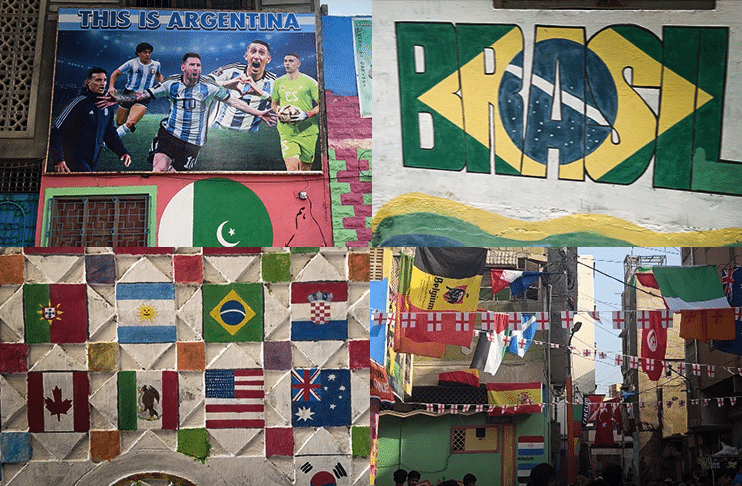
Brazil lies more than 13,000 kilometres away from Lyari. Yet for a month every four years, the distance seems to disappear. The FIFA World Cup 2026 is in full swing, and in this neighbourhood of Karachi, that’s all that matters.
Having heard the name ‘Mini Brazil’ countless times during the World Cup, I decided to see it for myself. Pakistan is barely a footballing nation, and it sits 198th in the FIFA rankings, but Lyari has never needed a national team to fall in love with the game.
Poverty, violence, and decades of neglect have left their mark on Lyari. However, every four years, during the World Cup season, those memories fade, and a goal scored 13,000 kilometres away is celebrated like a hometown win in ‘Mini Brazil’ Lyari.
I went in the evening, hoping to catch the preparations before match time and find passionate fans sharing insights on the global showpiece.
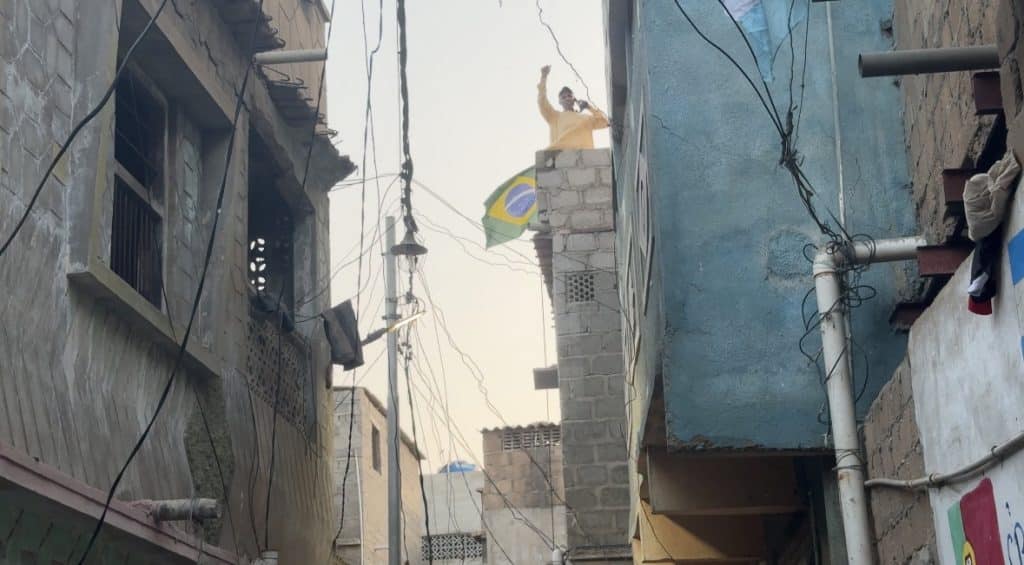
After making our way through the congested streets around Lee Market, we got close to our destination, Ali Mohalla. We knew we were close as the flags of a dozen nations were already visible, waving above the main road before we’d even turned in.
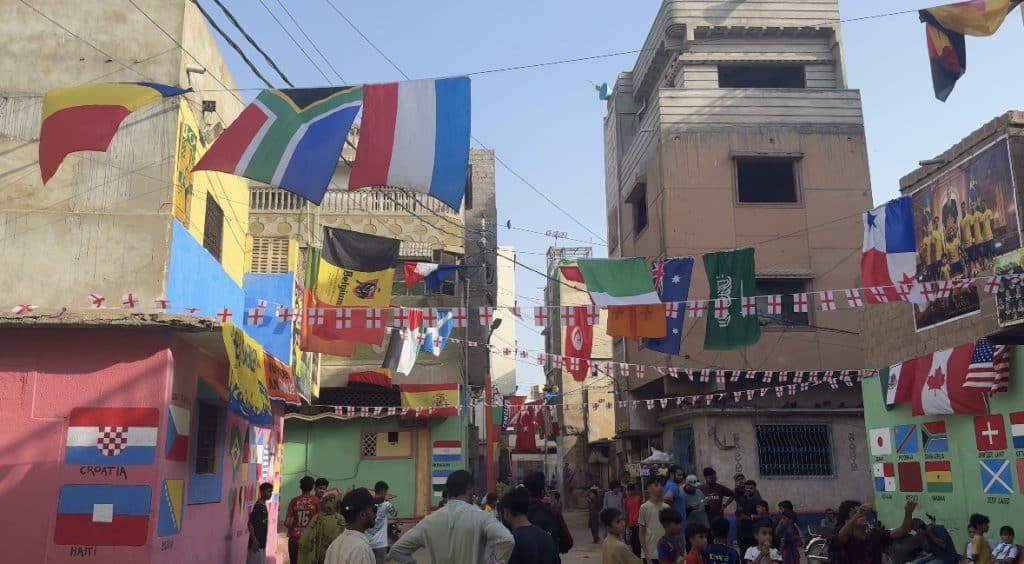
We asked our way through Lyari’s narrow streets until we found it. Ali Mohalla opened up like a different place entirely.
The flags of every participating nation in the World Cup were strung overhead, walls were painted with the faces of Neymar, Lionel Messi, and Cristiano Ronaldo, children played with the ball, and a few reporters moved through the crowd with cameras.
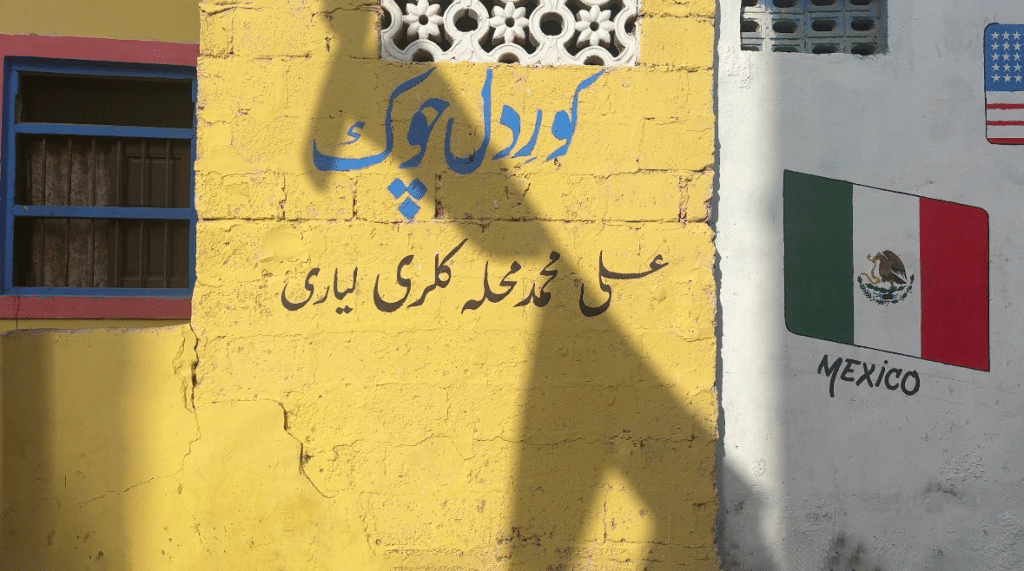
Even though there were flags and supporters of different teams, support for Brazil clearly outshone everything else. For a moment, it looked like a piece of Brazil had been dropped into Karachi. It was hard to believe this same neighbourhood had been better known over the last two decades for its troubles than its joy.
Old men and young kids stood shoulder to shoulder, admiring the painted walls and eagerly waiting for the kickoff. After spending merely 15 or 20 minutes, I realised football was more than just a game in Lyari.
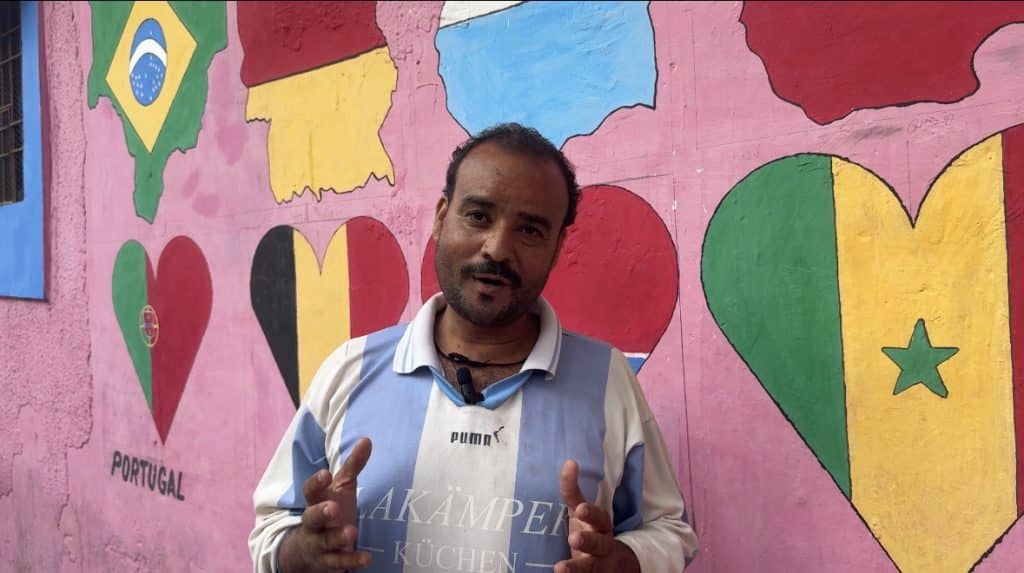
It was around then that Zahoor Sheikh walked up to us, wearing a jersey; he was a passionate Czech Republic fan.
He didn’t wait to be asked anything; he simply started talking and, within minutes, had appointed himself our guide through Lyari’s football world. Over the next hour, he walked us from one story to the next, introducing us to people who had a lot to tell.
The first was Lal Baksh, an old man somewhere in his seventies, who didn’t need much prompting to talk about football’s slow fall in Pakistan. He told us about a different era, one where football still had a place in the country’s sporting landscape.
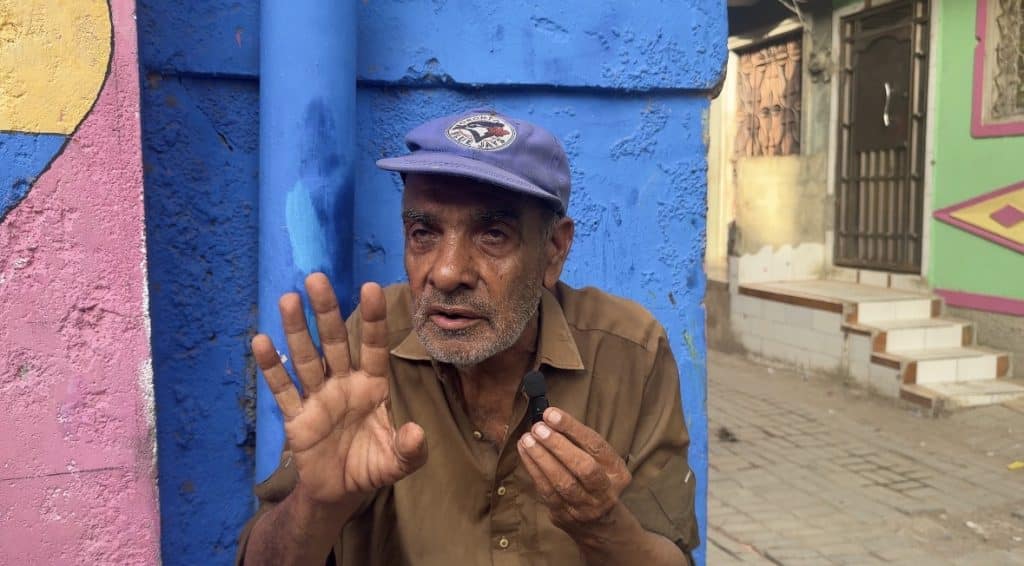
“There was a time when we had the RCD tournament, and Pakistan played alongside Iran and Turkey. Today, they are playing in the World Cup, and we could not even qualify. There is no government support,” he said.
Referring to the flags, decorations and giant screens put up across Ali Mohalla, he said, “Look at what we have done here. We’ve built this ourselves through charity (chanda), out of our own pockets.”
For Lal Baksh, the reason was simple. Football in Pakistan doesn’t get the importance it deserves because cricket receives almost all the attention.
We bid adieu to Lal Baksh and moved on, following Zahoor through a narrow alley that opened up into a wider, busier stretch of street.
People and children sat together under a canopy of flags strung overhead, while a large speaker nearby crackled with football commentary, drawing a small crowd around it. It was here that we met a man named Asghar Ali, who, we were told, had been televising football matches for the past 40 years.
“For more than 40 years, I have been televising sports because my aim has always been to keep young people engaged with sport,” said Asghar Ali.
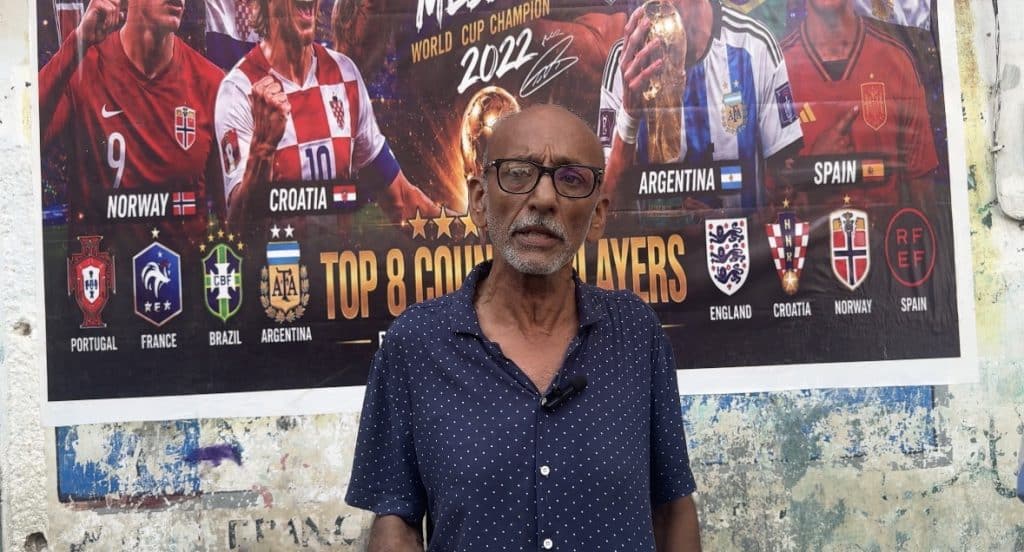
“You know, football is loved here; there’s Brazil, there’s Argentina. But, here, people love Brazil most of all.”
“The connection between Lyari and football is one of the best, but you know Lyarites have been labelled in a certain way. I have not watched a recently released Indian movie on Lyari, but they [movie makers] also know what the real Lyari is like, and what the people of Lyari truly love.”
From there, we walked through more of Lyari’s narrow, winding streets, stopping to talk to fans along the way, each with their own team, their own memory, their own reason for loving the game.
One of the evening’s most memorable encounters came when we met 86-year-old Raheem Dad. His glasses perched low, a beard framing a face that had clearly seen decades pass. What struck me was his passion for football, despite his age.
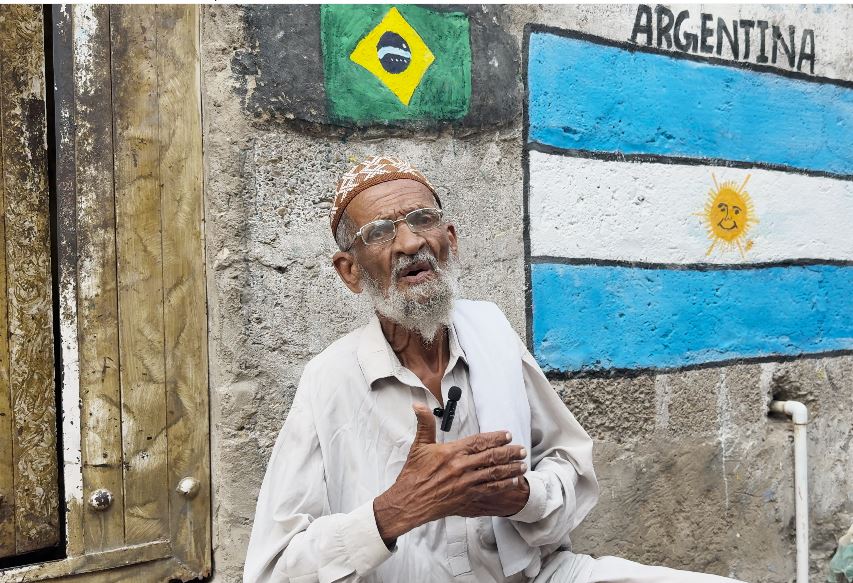
“I have been watching football since Maradona came into the Argentina team. My team is Argentina. Before Maradona came, there weren’t many teams with the same reputation as Brazil. When Maradona came, several other teams also came in the way. Argentina is a favourite team of many,” he said.
“[Lionel] Messi is a top player who has won a title for his team. I agree, Brazil is a good team, but Argentina will win this time. Neymar is injured, and people have been talking about him, but Argentina will emerge victorious.”
“Last time Argentina won, I celebrated so much I couldn’t control myself. Dhols [drums] came out, and I went around greeting everyone in celebration.”
He also recalled an Argentina-Brazil game, recounting how the media at the time had framed it less as a match between two countries and more as a duel between ‘Maradona and Brazil’.
Making our way back to the main area, we found the man behind it all, Shahjahan Baloch, the chief organiser of Ali Mohalla’s World Cup decorations. It was Shahjahan who oversaw the flags, coordinated the murals, and ensured every panaflex was in place before the tournament began.
“I am the chief organiser, but we do everything together, brothers, friends, all of us in consultation with each other,” he said.
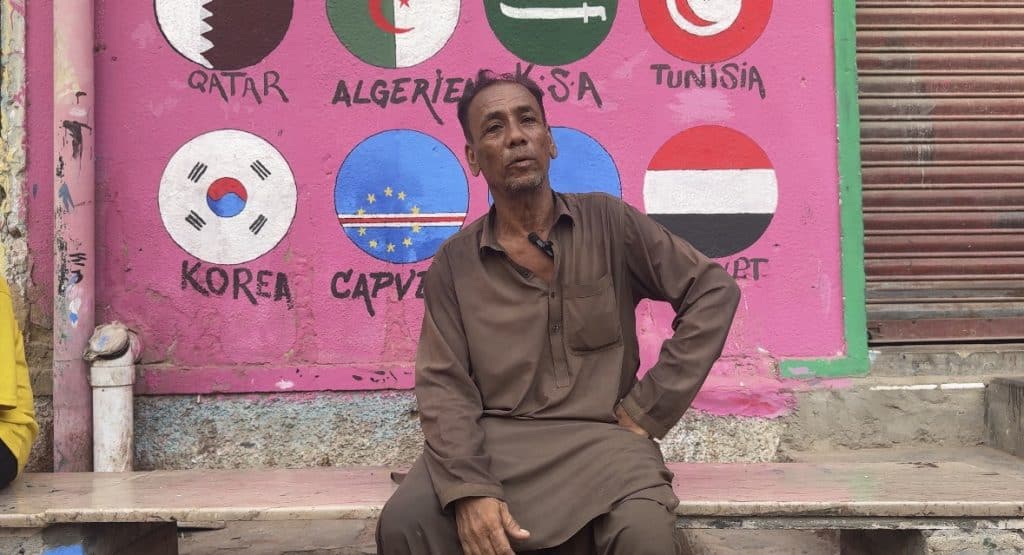
“Some people bring paint, some paint on their own, and some bring a panaflex of their favourite player. It is all a shared effort.”
He explained that the planning happens well in advance.
“We get it all ready about 25 days before the tournament begins. We gather at night, have tea, sit together and plan. Then when the matches come, we all watch together, every community from this neighbourhood, side by side.”
For Shahjahan, this wasn’t just a FIFA World Cup tradition. It was a way of life rooted in the streets he grew up in.
“In our leisure time, we watch football. Here, children as young as eight start playing football,” he remarked.
After an evening spent in Lyari’s narrow streets, talking to men who had loved this game for longer than I had been alive, one thing remained difficult to understand: how a neighbourhood that loved the game so deeply had been ignored for so long.
Zahoor sat with us a little longer before we left, sharing what he knew about the game and the players. He offered us refreshments; we settled for water. It felt like the right kind of ending to an evening like this, simple, unhurried, warm.
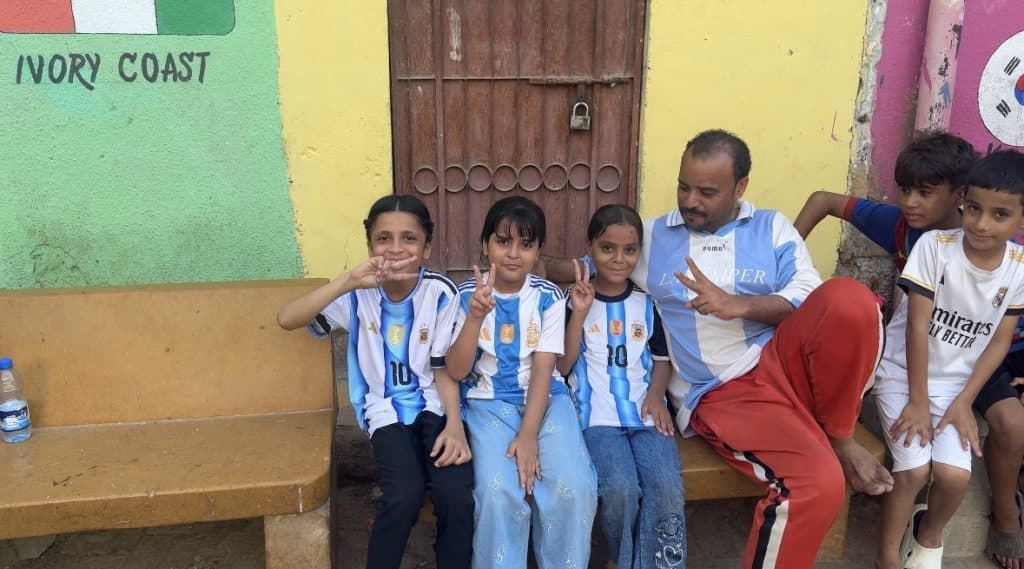
As we made our way back through the same streets we had arrived on, past the waving flags and painted walls, the question I had come with, how could both versions of Lyari be true, the troubled one and the one I have seen, felt closer to being answered.
They were not two different places. They were in the same place, carrying both things at once. The hardship was real, and so was the joy.
Every four years, for a month, joy wins in ‘Mini Brazil’ Lyari, because football has always been stronger than whatever tries to stand in its way.
Brazil may be 13,000 kilometres away. Standing here, it didn’t feel like it.
READ: Former Australia all-rounder Moises Henriques to debut for Portugal
